SOLUTIONS
Security Detection & Forensics
One source of truth, shared by NetOps and SecOps



One source of truth, shared by NetOps and SecOps
Security teams build detection and response around logs and agents – records an attacker can disable, alter, or simply outrun. So, when an alert fires or a threat evades detection, analysts are left reconstructing incidents from whatever survived.
Without a trustworthy record of what actually crossed the wire, security investigations can stall while compliance audits are missing evidence.
Network and Security teams typically investigate from separate data sets. Instead of reconciling tools and viewpoints, what if you could feed deduplicated, filtered traffic at line rate to IDS/IPS, NDR, DLP, and forensic tools?




Investigate with packets captured out-of-band from the network, independent of hosts, agents, and logging configuration.

Pull the few thousand packets behind an alert from a multi-billion-packet capture quickly, so analysts investigate instead of wait.

Surface scanning, C2 beaconing, DNS abuse, and exfiltration patterns that signature-based tools can miss.

Deliver filtered, deduplicated traffic to IDS, NDR, and DLP tools so they inspect what matters at line rate.

cStor appliances simultaneously capture every packet and run L7 session analytics, so every alert and the packets that prove it come from the same record.
cVu packet brokers acquire traffic from optical taps, SPAN, and cloud mirroring, then filter, deduplicate, and slice it before delivering it to security tools and cStor. cStor records and indexes the traffic while generating session metrics.
When an alert fires, an analyst pulls the original packets in minutes. When a threat evades detection entirely, the retained capture is the only evidence there is.
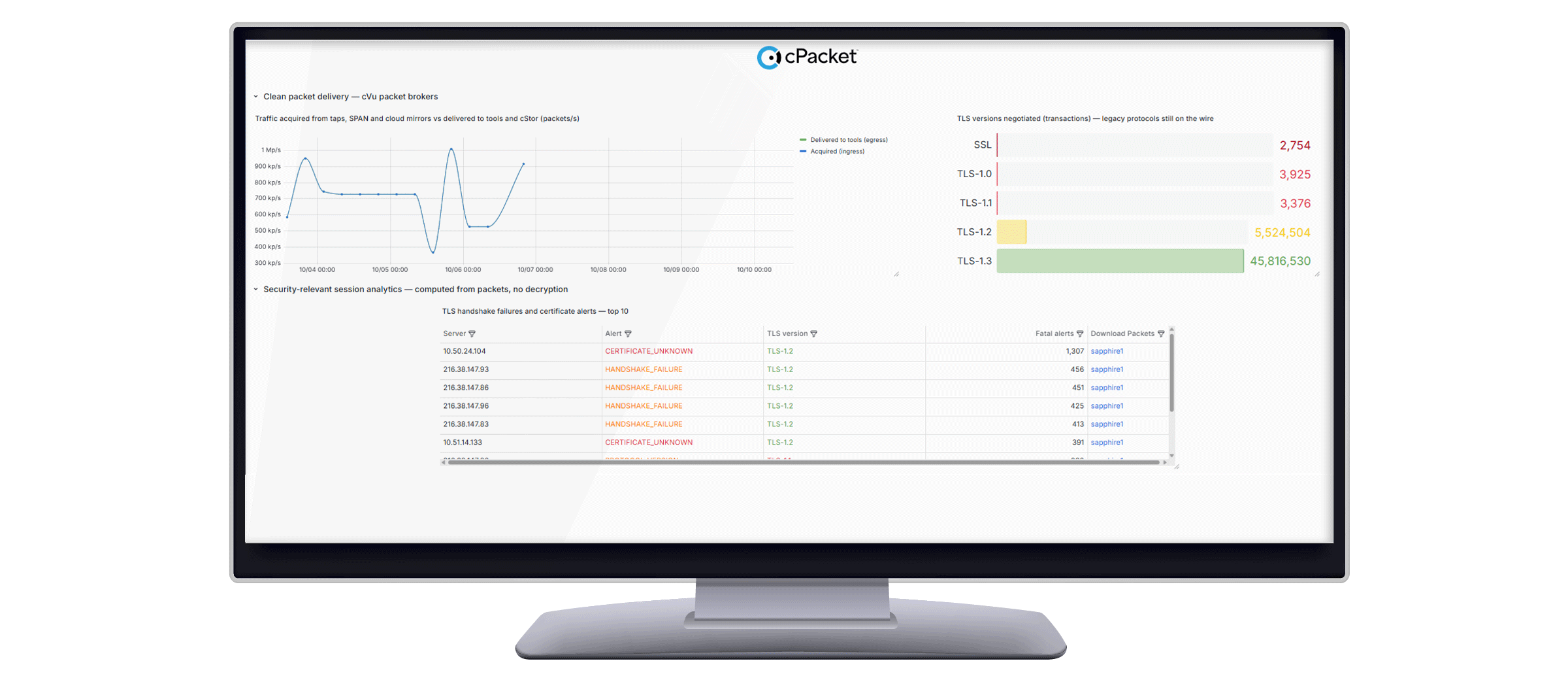



cVu packet brokers deduplicate, filter, and slice traffic per port at line rate, so IDS/IPS, NDR, and DLP tools each get exactly the traffic they need.
cStor analyzes DNS, TLS handshakes, LDAP, and TCP sessions without decrypting payloads, exposing certificate issues, cleartext credentials, and unusual connection behavior.
Finds the packets that matter by skipping blocks that don’t match – built for needle-in-a-haystack SecOps queries, not just heavy-talker pulls.
cPacket AI reasons over complete, high-fidelity packet data through purpose-built MCP servers and encoded security skills, so every finding traces back to wire evidence.
An analyst simply asks a question in their company’s approved LLM. cPacket AI queries the data, correlates DNS, TLS, and TCP activity, and explains what it found with supporting evidence. cPacket AI covers detection and analysis, while remediation decisions stay with the security team.
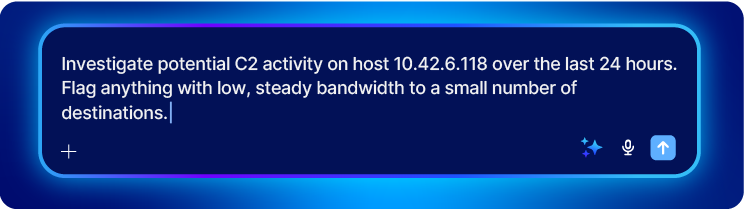

Pre-built workflows detect port scanning, C2 beaconing, long-lived suspicious sessions, DNS tunneling, algorithmically generated domains, and data exfiltration patterns.
On-demand checks flag expired certificates, weak ciphers, deprecated TLS versions, cleartext LDAP, and embargoed-country traffic to support HIPAA, PCI DSS, and SOX reviews.
The AI narrows the investigation and explains the findings, but the security analyst makes the call to act, maintaining operational control and accountability.
Get answers to common questions about network observability and cPacket solutions.
cPacket packet brokers feed security tools clean, deduplicated packet data and captures the same traffic for forensic retrieval, enhancing the existing security stack rather than replacing it.
Packets are captured from the network itself, external to the hosts and agents being monitored, and immutable once on the wire.
Indexing skips capture blocks that do not match the query, so sparse, needle-in-a-haystack searches across days of traffic return in seconds instead of scanning the full window.
cVu packet brokers send copies of the packets to the security tools AND packet capture appliances, so both tools get the same data at the same time to use during investigations.
Our team of experts can work with you to align your network strategy to cPacket’s industry-leading packet broker and capture solutions.